
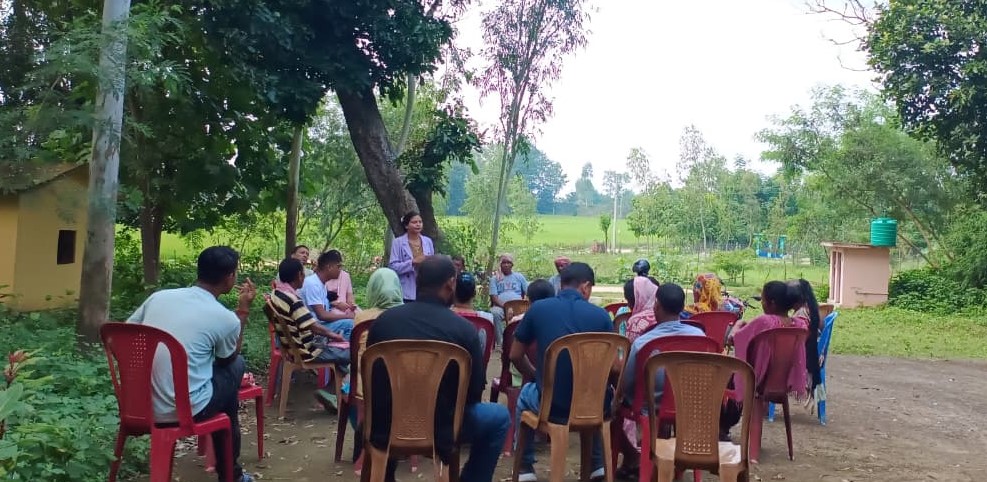
Nepal has been a recipient of foreign aid for over six decades. Since the restoration of multiparty democracy in 1990, that inflow of money has generated a parallel industry: development or more commonly, the ‘NGO sector’. The bulk of that money flowed into programming, be it service delivery, infrastructure, or advocacy, with research allocated only a small fraction of overall budgets, rarely more than a few percentage points. Yet it was research that provided the rationale for the rest. From post-conflict transformation to federalism, from climate resilience to gender empowerment, research became the scaffolding upon which development programmes were designed, justified, and evaluated. This article, drawn from my own experience playing both roles as a donor and as a consultant, examines the situation of development research in Nepal.
A crowded sector
Nepal’s NGO sector is often described as having ‘mushroomed’ after 1990. By 2025, the government’s regulatory body, the Social Welfare Council (SWC), was overseeing more than 54,000 NGOs and 200 international NGOs. These figures, however, require scrutiny. As critics have pointed out, the sheer volume of registered entities says little about their actual reach, representativeness, effectiveness, or even how many of these are still operational, a point developed at length in analyses of how the NGO discourse in Nepal has been systematically distorted by both proponents and detractors of the sector.
Nepal's Statistical Performance Indicator (SPI) score for data infrastructure, i.e., Pillar 5 of the World Bank's framework for assessing national statistical systems, was as low as 20 (out of 100) in 2020; however, it improved significantly during the 2021–23 period (reaching up to 55 in 2023) and then had a modest drop (50) in 2024. This shows that there is still enough room for improvement in the country's capacity to generate and use evidence effectively. Likewise, the Asian Development Bank's 2025–2029 Country Partnership Strategy for Nepal mentions that ‘the knowledge and research agenda in Nepal is underdeveloped’. ‘National consultant rates’ are frequently inadequate, creating a race to the bottom in which firms cut corners to survive.
The consultant’s point-of-view (POV)
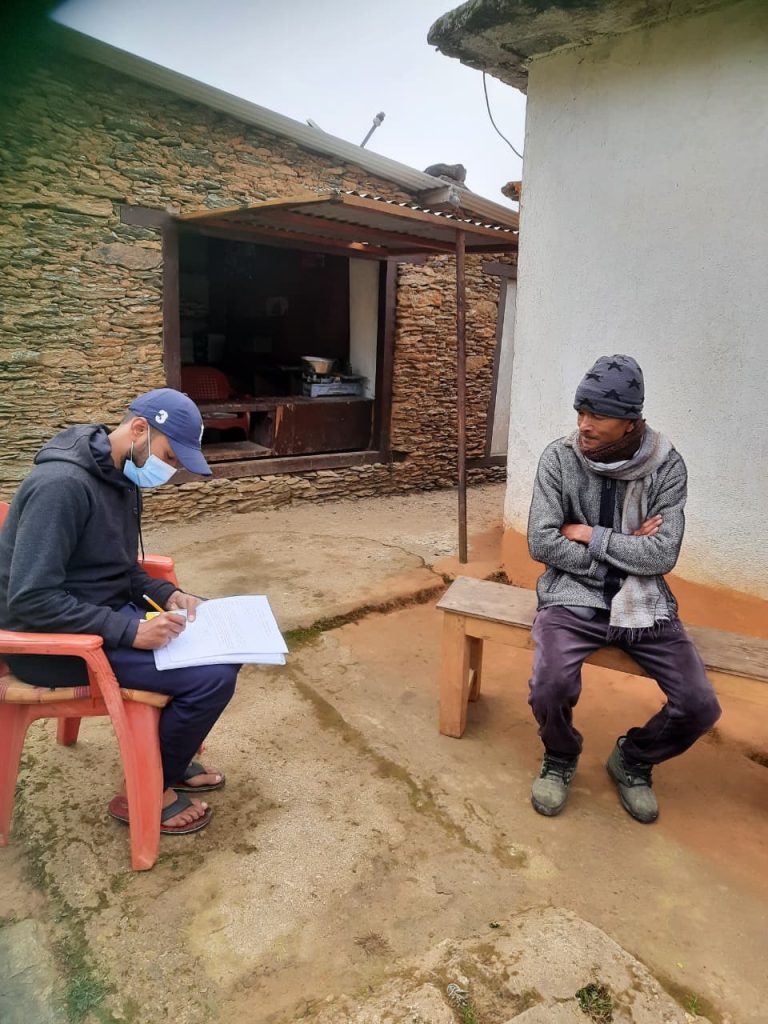
Although not symmetrical, one of the most persistent challenges facing both funders and consultants is a fundamental misunderstanding of what rigorous qualitative research involves. Funders set the terms, timelines, and budgets; consultants accept them. Both share responsibility, but it is the funder’s structural power that shapes what is ultimately possible. Qualitative methods are routinely reduced to a narrow toolkit of key informant interviews (KIIs) and focus group discussions (FGDs) deployed as plug-ins rather than as context-sensitive approaches requiring significant interpretive skill.
What is consistently overlooked is the labour-intensive work that follows data collection: transcription, systematic coding, iterative analysis, triangulation, and interpretation. A single one-hour FGD can require eight hours of transcription and several more of analytical coding before a single insight can be responsibly drawn. Yet entire research studies are routinely expected to be completed within a month, often with budgets that do not reflect the true cost of quality. Research becomes, in effect, a compliance requirement rather than a genuine investment.
Some critics highlight organisations suffer from what has been called ‘founder syndrome’ and struggle to delegate decision-making, build systems around delivery and quality assurance, and invest profits back into developing support staff. It is also evident that most research organisations in Nepal operate as for-profit entities, meaning cost-saving imperatives routinely override methodological rigour. A single researcher is deployed across multiple projects simultaneously. The result is research that meets a deadline but generates little actionable insight.
There is also a troubling prevalence of what practitioners privately call the ‘Know-All Researcher’: a senior professional who claims expertise across vastly different thematic areas: governance one month, climate adaptation the next, and women’s economic empowerment the month after, without visible investment in building new knowledge. Combined with the normalisation of copy-paste practice, this produces reports stuffed with generic statements such as ‘communities face multiple vulnerabilities’ or ‘women are disproportionately affected’. Such phrases recur across reports for different sectors, different provinces, and different beneficiary populations, as if context were merely a variable to insert into a pre-existing template.
The donor dilemma: Accountability without ownership
Donors are not passive observers in this failure. They operate under their own constraints, such as tight funding cycles, accountability pressures from headquarters, and the imperative to demonstrate value for money, and these shape the research they commission in ways that are rarely acknowledged openly.
The World Bank’s Nepal Public Expenditure Review found that technical assistance in Nepal had frequently been ‘costly and externally driven, with limited attention to strengthening domestic institutional capacity’. The report noted that reliance on international consultants often resulted in parallel systems and outputs that were poorly integrated into government processes, limiting sustainability. The Ministry of Finance’s Development Cooperation Report 2024/25 confirms that while there is notable progress in terms of domestic revenue mobilisation, there is still significant dependence on external inflows in the form of remittances and Overseas Development Assistance (ODA) to sustain growth and finance development priorities.
The shift in Nepal’s aid composition over the past decade makes these failures increasingly consequential. In 2010/11, grants accounted for 57 per cent of foreign aid; by 2023/24, that share had fallen to under 40 per cent, with loans rising to over 60 per cent. Borrowed money directed at poorly understood problems and guided by research that is disconnected from operational realities is a recipe not just for wasted resources but for compounding debt and inequality.
Lost in translation
The original intent behind commissioning a piece of research on what question it was meant to answer and what decision it was meant to inform gets progressively diluted as it passes from donor to implementing partner to sub-contractor to field team. By the time a consultant receives a terms of reference (ToR), it may have been revised multiple times, often in ways that obscure rather than clarify purpose. The key performance indicators expected of the research or the donor’s actual learning priorities frequently surface only after data collection has begun or when a first draft is already in circulation. Once a contract is signed, the risk of termination is relatively low. Revising a report is easier for implementers than cancelling a consultancy altogether. This creates an environment where sub-standard outputs face limited consequences, allowing mediocrity to become normalised under the justification of ‘efficiency’ so long as the work was delivered on time.
The report that nobody reads
In many cases, development research in Nepal is commissioned without a clear theory of change for evidence uptake. The end-product becomes a report that sits in someone’s inbox rather than a tool to inform adaptation, decision-making, or scale-up. A review published in the journal, Health Policy and Planning, identified five key factors impeding evidence uptake across low- and middle-income countries: lack of available research; poor dissemination of findings; limited access; lack of clarity and relevance; and unsuitability of format. Nepal exemplifies all five, but particularly the latter three.
The consequences extend beyond wasted budgets. When research fails to generate genuine insight, development programmes are designed on incomplete or misleading evidence. Resources are misallocated. Beneficiaries are served by interventions shaped more by donor priorities and consultant availability than by contextual reality. As a recent analysis put it: without evidence-based policy, ‘resource allocation becomes guesswork, progress remains invisible, and governance risks being reactive rather than strategic’.
For donors, this represents a profound irony. Research is commissioned partly to generate the evidence needed to justify continued investment to headquarters and to sceptical publics at home. When that research is never used, when findings never migrate from PDF files to policy, donors lose their own most powerful argument for continued engagement.
The governance gap: NGOs, bureaucracy, and the SWC
The crisis of development research cannot be fully understood without examining the broader governance environment in which it takes place. Nepal’s NGO sector is not merely large, it is poorly governed, and that poor governance has direct implications for research quality and accountability.
The Social Welfare Council (SWC), established as an autonomous body under the Social Welfare Act of 1992, was meant to be the principal oversight institution for Nepal’s NGO sector. In practice, it has become a byword for bureaucratic inefficiency. Registration and affiliation processes required multiple approvals, generated persistent delays, and, as civil society organisations have repeatedly documented, created opportunities for rent-seeking at every step. The SWC’s 80/20 rule (capping administrative costs at 20 per cent), while well-intentioned, was applied rigidly and unevenly, creating compliance burdens that disadvantaged smaller, locally grounded organisations while doing little to ensure the quality of research outputs.
This rule also exposed a deeper structural tension that runs through Nepal’s NGO sector: the distinction between ‘hardware’ and ‘software’ activities. Hardware, i.e., physical infrastructure and equipment, is ‘visible’ in the eyes of the donors and regulators to verify. It also allows the local politicians to use these investments as a good political tool for the ‘development’ they have catalysed in their respective constituencies. Software, i.e., activities such as capacity building, research, facilitation, and advocacy is less tangible, harder to audit, and therefore more vulnerable to being squeezed out by cost-compliance pressures. Development research, sitting firmly on the software side, has accordingly been one of the first casualties when budgets are cut and administrative ratios are enforced.
In 2018, the Commission for the Investigation of Abuse of Authority (CIAA) filed an NPR 315 million corruption case against 14 individuals, including the then-Minister of Women, Children and Social Welfare and the ex-officio chair of the SWC, Badri Prasad Neupane, for violating public procurement laws in the illegal renting of SWC-owned land around Bhrikuti Mandap in central Kathmandu. The case exposed how the very institution tasked with overseeing civil society had itself become a vehicle for elite capture and misappropriation.
Civil society groups had called for the SWC’s reform for years before this scandal. But the government’s eventual response, in the form of a draft bill circulated in 2025, alarmed many in the sector. The proposed legislation did not merely reform the SWC, it proposed dissolving it entirely and replacing it with a new Social Welfare Department under the Ministry of Women, Children and Senior Citizens. This would mean direct ministerial control over the registration, regulation, and management of all NGOs and INGOs in Nepal. The NGO Federation of Nepal condemned the draft as ‘retrograde and cumbersome’, stating that it was intended to ‘further constrain and control civil society organisations rather than facilitate and strengthen them’. A particularly problematic provision stipulated that all NGOs would be required to have boards composed mainly of government secretaries.
The International Center for Not-for-Profit Law (ICNL) had separately flagged that the existing legal framework already grants the SWC broad authority to ‘inspect financial accounts, cash, and assets of affiliated organisations at any time’, raising concerns about intrusive oversight even before the new bill’s provisions. Section 14 of the Association Registration Act further provides for dissolution of organisations under minimally stated grounds, providing wide discretion to authorities.
Nepal’s federal transition has added a further layer of complexity. Power is now decentralised across federal, provincial, and local levels, but the SWC operated primarily at the federal level. Research-commissioning organisations must now navigate multiple layers of approval, often with unclear division of authority between federal, provincial, and local bodies. A research project touching on, say, maternal health or watershed management now requires endorsement from a federal ministry, the provincial social development ministry, and one or more local government units, each with its own administrative calendar and political priorities. Intergovernmental coordination mechanisms remain weak. Provincial governments, many of which are still building their own research and planning capacities from scratch, lack the staffing or frameworks to engage substantively with research designs or findings. The result is not just delay, but a further fragmentation of the already thin evidence-base that policymakers can draw on.
A shared responsibility
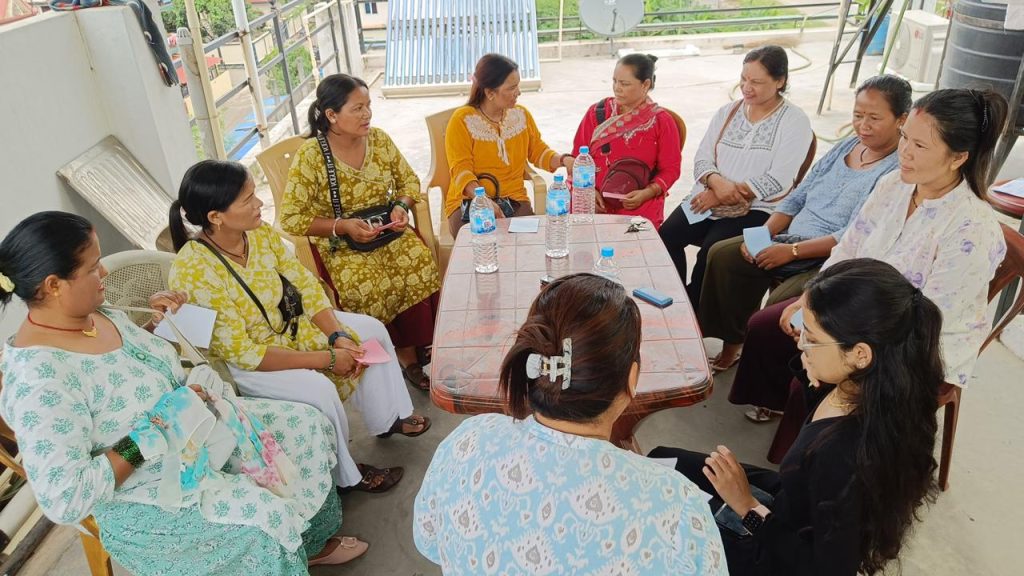
It is imperative that all stakeholders consider improving the research quality and practice as a shared responsibility. Donors need to articulate clearer expectations, resource research realistically, and invest in the kind of long-term partnerships that allow genuine understanding of context to develop. As Nepal’s aid composition shifts toward loans, the accountability stakes rise. Borrowed money directed at poorly evidenced programmes compounds both fiscal risk and development failure.
Implementers must actively engage with research agencies throughout the process, not merely at commission and receipt. The disconnect between the ToR and final submission is where intent dies and boilerplate flourishes. A theory of evidence uptake, i.e., how any piece of research will be used, by whom, and when should be built into every study design from the outset, not added as an afterthought in a final recommendations section that nobody reads.
Consulting agencies must uphold professional integrity, invest in genuine thematic expertise, and resist the temptation to prioritise speed and cost over rigour. The risk calculus is currently mis-calibrated: the cost of terminating a contract is high; the cost of submitting a mediocre report, low. Donors and implementers need to rebalance this equation through meaningful quality assurance including, where necessary, the willingness to reject and return work that fails to meet basic standards of analytical quality.
Government institutions, local governments, provincial planning commissions, and the SWC (or its successor) must become genuine custodians of evidence quality rather than gatekeepers of procedural compliance. The proposed dissolution of the SWC, if it results in even greater bureaucratic fragmentation without corresponding investment in analytical capacity, risks making things worse rather than better. What Nepal needs is not more control of civil society but a better architecture for how research connects to governance.
Conclusion
Nepal’s development research landscape is not beyond repair. The country has genuine analytical talent, a growing generation of researchers trained to international standards, and a federalised governance structure that, in principle, creates more points at which evidence can connect to decision-making. However, the system, as currently structured, treats research as a procedural requirement rather than a strategic investment.
As the global aid environment tightens (with the US government drastically reducing its funding to Nepal), and Nepal’s scheduled graduation from least-developed country status may raise the cost of multilateral borrowing, the consequences of poor-quality research become more acute. There is less room for error, less money to absorb the cost of interventions designed on weak evidence, and less goodwill from donors who need rigorous proof of impact to justify continued engagement.
Development research in Nepal can become a compass rather than a checkbox. But that requires all actors in the ecosystem—donors, implementers, consulting agencies, and government institutions—to come together to simultaneously, honestly, and urgently improve the current practices in the development research space.