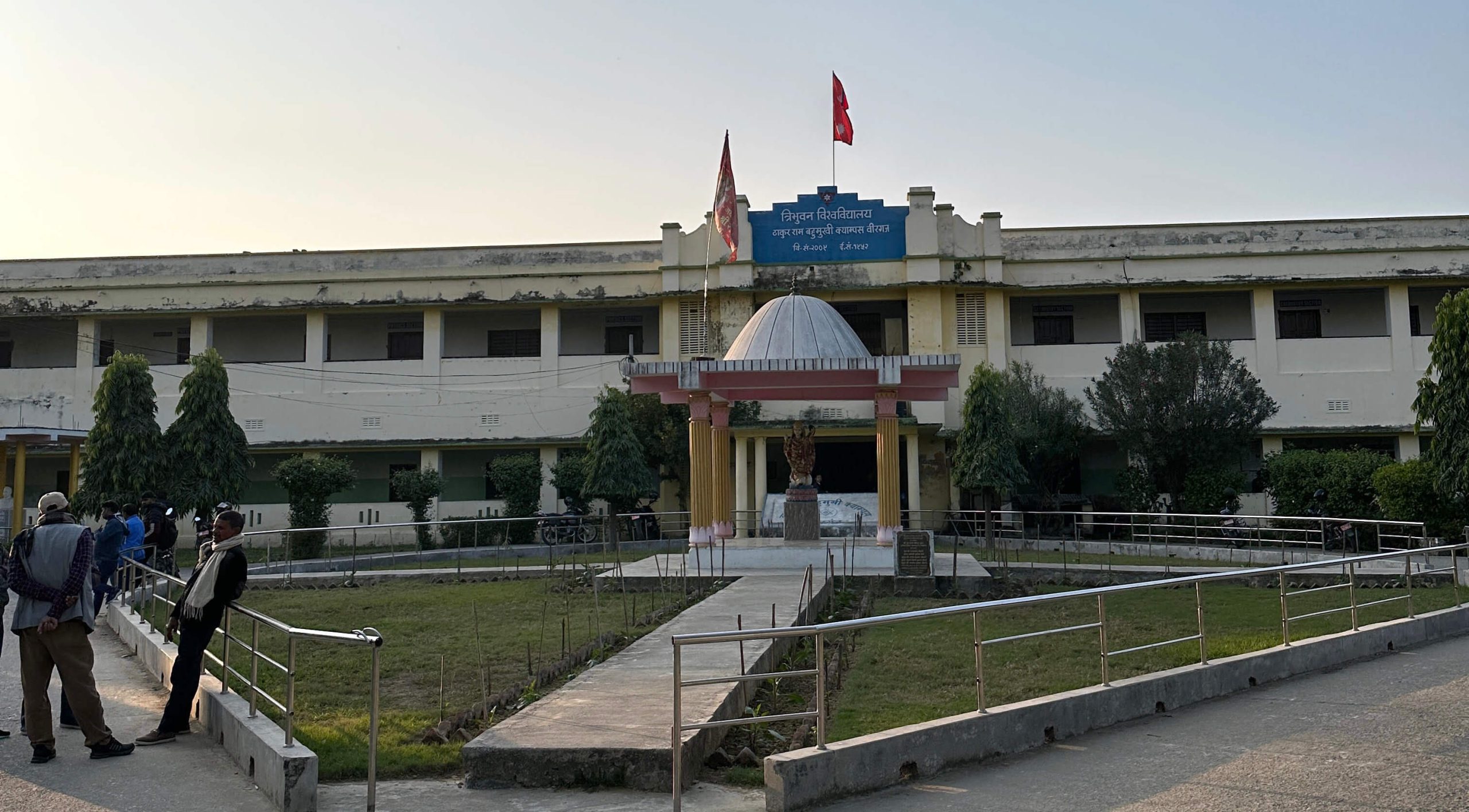
The Bachelor of Arts (BA) curriculum is uniform for all institutions affiliated with the Tribhuvan University (TU). However, its execution differs within the academic environment of different institutions. We often hear criticisms that TU’s curriculum needs to be revised. That may be so, but there can be impactful learning within the same curriculum through slight modifications, a different teaching initiative, and a learning process. I know this because I experienced a positive learning outcome in my institution while I was undergoing my undergraduate programme. This article is not further criticism of the TU curriculum but only a reflection on how my experience remained positive.
Curriculum and electives
In 2019, I enrolled in the BA programme at a TU-affiliated college. My first major was Journalism and Mass Communication, and my second was Sociology. The first challenge I encountered when I enrolled was to understand the structure of the curriculum. Initially, I could not find the relevance of sociology in a Journalism major. I did not realise the interdisciplinary approach in the beginning. Over time, I understood the reason for the combination of the two majors. Each course I took in both disciplines complemented the other. To become a journalist, one needs to have a sound knowledge of society and its various dimensions and complexities.
The media courses I read only provided the foundational knowledge of journalism. A critical mindset that journalism demands was not possible through these alone. The content of media courses was filled with theories and principles. As part of the practical component, we had to come up with different forms of writing such as news, op-eds, cultural commentary, etc. Even to write these pieces, we needed to understand our social structures. Reporting on various issues in journalism could be done only after understanding the subject from various lenses. The media courses familiarise the students with technical and practical knowledge of journalism. However, the instinctive skill and criticality that a journalist requires could only be acquired through sociology courses (as well as other courses such as history and political science). It was at this point that I understood the reason for the incorporation of sociology as a second major. I learnt a lot through social courses such as ‘Dynamics of Nepali Society’, ‘Sociological Theories’, ‘Social Diversity and Inequality’, ‘Development and Democracy’, and ‘Nepal Studies’.
In ‘Nepal Studies’, a compulsory course in BA, the TU has recommended almost five dozen readings. Covering all those readings was not possible. In reference to those dozens of readings, a comprehensive Nepal Studies book was available in the market. We opted not to refer to it to cover the course, we only went through the book when preparing for the board exams. Our educator selected specific works from the recommended readings. As written in the syllabus, the aim of the course was to understand Nepal from diverse aspects (historical, geographical, and socio-political contexts). Twelve books were selected in total. We read six of them each semester in the final year of my undergraduate programme in 2023 (although the course is yearly, the classes are run in a semester model). We did not totally disregard the syllabus but, when necessary, our educators shaped it to the needs of the students.
The TU courses are assigned to be completed over the course of a year but some are completed within one semester. In the other semester, elective courses are covered. My institution holds value in adding to the critical thinking mass and elective courses are one way to increase that mass. ‘Political Thoughts’ was an elective course but separate from the TU curriculum. This elective course was designed by our educator himself. The course aimed to unpack issues that have significantly impacted present-day political discourses on caste, class, identity, education, health, development, and knowledge. Through a thematic approach, we discussed well-researched texts by foreign as well as Nepali scholars. The course was impactful in strengthening our understanding of topics crucial to our academic majors. Additionally, the course helped students build a habit of asking questions and thinking critically of the social situation and the systems that seem normative.
Classroom space and learning process
The TU intends to produce a group of critical thinking graduates through its BA programmes. Access to texts alone will not be enough for that. The learning environment needs to be such where the same curriculum can unleash thinking habits in students.
The institution where I was enrolled did not follow teacher-centric teaching methods. Our educators introduced a few techniques that made our learning process impactful. First, our classes were held in seminar mode. Each session lasted for one and a half hours: forty-five minutes were for educators, and the remaining forty-five minutes for discussions. A text was assigned a week before the class meeting. Students were expected to read and share ideas orally before hearing from educators. Afterwards, students would raise questions and clear any confusions through further class discussions.
Second, sometimes our educators provided students with additional texts relevant to the topic. They did this especially when the prescribed texts were not sufficient to fully understand the subject. We were recommended to read other research articles or books to enrich our knowledge. Our educators also shared interesting and relevant news articles in our social media group. The group was created for the purpose of academic communication. We were always kept updated on contemporary debates on the topic of our study, through classroom discussions and sharing of news articles in the group. These acts displayed the educator’s readiness to customise the curriculum and their teaching methods with the changing times.
Third, our educators tapped into the diverse backgrounds of students. At times, students would share their cultural knowledge to help us better understand societal practices. For example, while reading the text ‘Similarity and Difference’ by Richard Jenkins, we were assigned to write our biographies in terms of our identity. We exchanged and read those biographies to understand each other’s social positions shaped by our ethnicity. Such exchange fostered inclusivity in the classroom space, allowing us to understand society through the lens of lived experiences. There were no fixed rules, but the guiding principle was to ensure that we connected better with the texts we were reading.
Fourth, in the final year, we incorporated presentations into classroom discussions. This idea of presentation was pitched by our educator to deal with the uneven involvement of students in the class. Presentations were pre-scheduled, ensuring everyone would get their turn. For each class, we had two presenters and two commentators. Even those not presenting or commenting were still expected to read the texts. The time allotted for the presentation was approximately 15 minutes. After the presentations and comments, we would resume the class discussion. Each presenter would upload the presentation slides to the Fuse classroom forum. The Fuse classroom is an AI-enabled educational platform that also worked as an archive that could be used to revise the course by students as needed. The uploaded slides were revisited later by students when preparing for the exam. It helped students to keep track of what was being taught and discussed throughout the year. This was also helpful for students in taking updates when class discussions were missed.
Finally, apart from presentations, we were given assignments. These assignments were not limited to textbook content; we had to reflect on what we had read by comparing them with our personal experiences, namely, how we related with those topics in our own lives. The consistent practice of such assignments challenged us to expand our thinking and engage with the ideas we studied. The classroom was a key space where we were encouraged to nurture critical thinking through participatory approaches that were strategically deployed by our educators.
The TU’s curriculum for the BA programme may have some limitations, but if educators want, they can tweak it. Through subtle changes in the existing syllabi and by offering additional elective courses, they provided a different academic environment for deep learning. We were able to cultivate critical thinking skills to better analyse the world around us. This was possible through a supportive system, effective educators, and an engaging classroom space.
Birsana Shrestha currently works as a researcher at Martin Chautari. She is also engaged as an educator for first-year undergraduate students. Her research interests lie in social science issues. ...
Birsana Shrestha currently works as a researcher at Martin Chautari. She is also engaged as an educator for first-year undergraduate students. Her research interests lie in social science issues.