
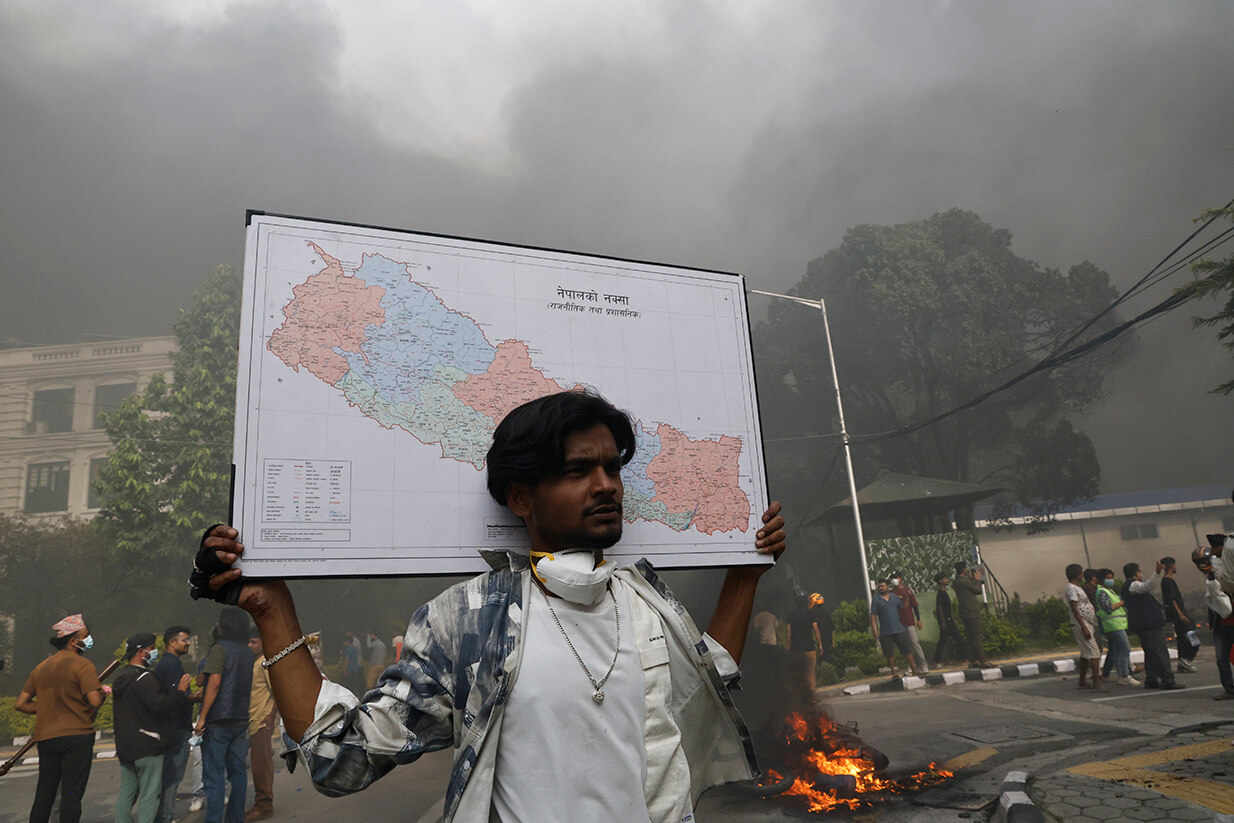
Nepal now stands at a rare and potentially transformative moment in its political history. A new generation has come to power through the democratic process, backed by a strong public mandate for reform and development, and driven by a widespread desire to break from the failures of the past. The rise of the Rastriya Swantantra Party (RSP) represents not only an electoral shift but a deeper generational rupture. Young, educated, and globally exposed leaders replaced an older political class that had dominated the country for decades. For many citizens—particularly the urban youth and the educated middle class—this transition signals the possibility of a new political culture grounded in meritocracy, transparency, and efficiency.
Yet, this moment of rupture must be understood within a longer historical pattern of repetition. Nepal’s major political transformations—from the 1950 Revolution to the 1990 and 2006 People’s Movements, and the promulgation of the Constitution of Nepal 2015—were all moments of profound hope. Each promised to dismantle entrenched hierarchies and usher in a more accountable, inclusive, and development-oriented political order. However, over time, these transitions produced familiar outcomes: corruption, patronage networks, institutional weakness, and the consolidation of power within a relatively narrow political elite.
This recurring cycle has been sustained not merely by poor leadership or flawed policy, but by the reproduction of a political class—a group whose identity, livelihood, and social mobility are deeply tied to politics itself. In Nepal, politics has increasingly become not just a means of governance, but a primary avenue for status, income, and influence. The emergence of a new generation in power, therefore, raises the deeper question of whether this transition represents a transformation of the political class or merely its renewal under a new leadership and aesthetics.
Youth leadership: Promise and limits
At a time when young people are increasingly disengaged and uninterested in political affairs, the current political change reveals their commitment to the country’s future. The idea of a youth-led government also carried a strong normative appeal among the voters in the last election. Youth are often associated with energy, innovation, and reformist zeal, as well as a presumed distance from entrenched systems of corruption. In the run-up to the March election, this perception has contributed significantly to public optimism. A significant impetus for this change also came from the Nepali diaspora, many of whom perceived Nepal’s development as increasingly sluggish compared to the countries they lived and worked in. I observed many from the diaspora communities actively advocating for change on social media and persuading families back home to vote for the RSP.
However, the assumption that youthfulness alone ensures effective governance requires scrutiny. Governance is a complex, institutionally embedded process that demands technical competence, administrative experience, and the ability to navigate bureaucratic and political constraints. The distinction between mobilising for political change and governing effectively is critical.
Historical experience illustrates this clearly, and one such case is Assam in India in the 1980s. Following a mass movement led by the All Assam Students’ Union, political power was assumed by young leaders, with Prafulla Kumar Mahanta becoming chief minister at the age of 32, leading a cabinet full of young students. Despite strong popular legitimacy, the government struggled with administrative inexperience, insurgency, and the challenges of translating movement demands into policy. Over time, governance failures and allegations of corruption eroded its credibility. The Assam experience demonstrates that youth leadership, while symbolically powerful, does not automatically translate into institutional effectiveness.
Baacha-patra, economic promises, and ideological direction
The governing agenda of the RSP, articulated through its commitment paper, the so-called Baacha-patra, and early policy signals, reflects an ambitious attempt to shift Nepal from a politically saturated, remittance-dependent economy toward a more productive, investment-driven model. Unlike traditional manifestos that emphasise ideological positioning, this agenda is framed around outcomes—jobs, income, energy, efficient service delivery, and growth. Yet, beneath this performance-oriented language lie deeper questions about the feasibility, coherence, and long-term direction of the Nepali state.
A central pillar of the Baacha-patra is the expansion of hydropower as the backbone of economic transformation, increasing generation to 15,000 MW from the present 3,000 MW. The government’s commitment to increase hydropower output by five times within a relatively short time frame is therefore significant if achieved. It signals a shift from seeing hydropower as a long-term aspiration to treating it as an immediate engine of growth. The other two important pillars are the increase in per capita income to USD 3,000 and the generation of 1.2 million job opportunities within five to seven years.
The strategy outlined involves mobilising private sector investment through regulatory simplification, reducing corruption in licensing and procurement, and accelerating project approvals. There is also an implicit recognition that state-led development alone cannot unlock this potential. By repositioning the private sector as the primary driver, the government is aligning itself with a market-oriented, neo-liberal economic framework, where the role of the state is to facilitate rather than directly produce.
This brings into focus the ideological orientation of the government. Its Baacha-patra indicates the RSP follows liberal democratic principles and supports the present constitution—federal republic, welfare state, and liberal economy with social justice. Its principles seem quite similar to those of the Nepali Congress. What is different is that RSP seems more globally minded in providing political rights to Nepali diasporas, supporting even dual citizenship, and seeking their help in the country’s development. Its emphasis on private sector leadership, regulatory efficiency, reduced corruption, and state facilitation aligns with a market-friendly approach to development. At the same time, its commitment to democratic accountability, social justice, transparency, and institutional reform reflects a liberal political framework.
Yet this ideological positioning remains incomplete and somewhat ambiguous. One main issue is the ambiguity concerning the future of federalism. While federalism was designed to decentralise power and bring governance closer to citizens, it has also introduced layers of bureaucracy and coordination challenges. Within the new political discourse, there are emerging voices questioning the efficiency of provinces, with some suggesting their removal or restructuring. This has also been the public position of RSP although it has yet to come up with a suitable model to replace this form of devolved government.
Fiscal policy presents another unresolved tension. The government has signalled an intention to increase revenue while reducing the tax burden, a politically appealing but technically challenging objective. In recent years, local governments have often relied on increased taxation to sustain administrative structures, leading to public dissatisfaction. The RSP’s approach appears to prioritise expanding the tax base, improving compliance, and reducing leakage rather than raising rates. However, without clear strategies for broadening the productive economy, enhancing exports, or formalising informal sectors, the pathway to higher revenue remains uncertain. This creates a potential contradiction between developmental ambitions and fiscal capacity.
The question of remittances further highlights the structural complexity of Nepal’s economy. Remittance inflows have equalled roughly 25–30 per cent of GDP in recent years. While there is widespread recognition of the risks associated with such dependence—including vulnerability to external shocks and the social costs of migration—the immediate reduction of remittances is neither feasible nor desirable. The more realistic objective, as implicitly suggested in policy discussions, is to increase overall GDP thereby reducing the share of remittances relative to it.
The comparison with India is instructive here. India receives one of the largest volumes of remittances globally—USD 120–130 billion annually—yet, these inflows represent only about 3–3.5 per cent of its GDP. This reflects a large and diversified domestic economy capable of absorbing labour and generating income internally. For Nepal, the challenge is to move toward a similar structure, where remittances remain significant in absolute terms but become less central to economic stability. Achieving this requires sustained growth in productive sectors, increased domestic employment, and a shift toward export-oriented industries.
The Baacha-patra reveals both the ambition and the uncertainty of the current political moment. It outlines a vision of economic transformation driven by energy, entrepreneurship, and efficiency, underpinned by a broadly liberal and market-oriented framework. At the same time, it leaves key questions unresolved—about federalism, fiscal sustainability, and the structural transformation of the economy.
This combination of clarity and ambiguity reflects the broader nature of the new government itself. It is a product of a generation that is impatient with ideological rigidity and the governance process, and focused on results while operating within a complex institutional and social landscape that demands more than managerial solutions. Whether the agenda outlined in the Baacha-patra can move from aspiration to implementation will depend not only on policy design but on the government’s ability to navigate these deeper structural challenges.
The early signals of the emphasis on managerial efficiency do not appear fully aligned with the principles of good governance and social justice despite the commitments articulated in the Baacha-patra. This youth-led leadership has sought to distinguish itself from traditional politics through speed, efficiency, and a results-oriented style of governance. While this approach carries public appeal, especially to the middle class that aspires to quick modern development, and may be valuable in technical and administrative matters, its application to democratic governance raises important concerns.
Recent examples, such as bypassing parliamentary deliberation through ordinances in the name of expediency and the demolition of squatter settlements without adequate safeguards for displaced residents, suggest that efficiency alone is not a sufficient foundation for deliberative democracy—a core principle of liberal democratic governance that the Baacha-patra itself endorses. Governance processes require due procedure, consultation, accountability, and attention to justice, particularly where vulnerable populations are affected. Breaking entrenched political traditions and rituals can be necessary and desirable, but the pursuit of speed and rapid outcomes should not come at the expense of democratic process or create conditions of social injustice. Efficiency is important in governance, but it must operate within, rather than substitute, principles of due process, inclusion, and social justice.
A new elite and the reconfiguration of the political class
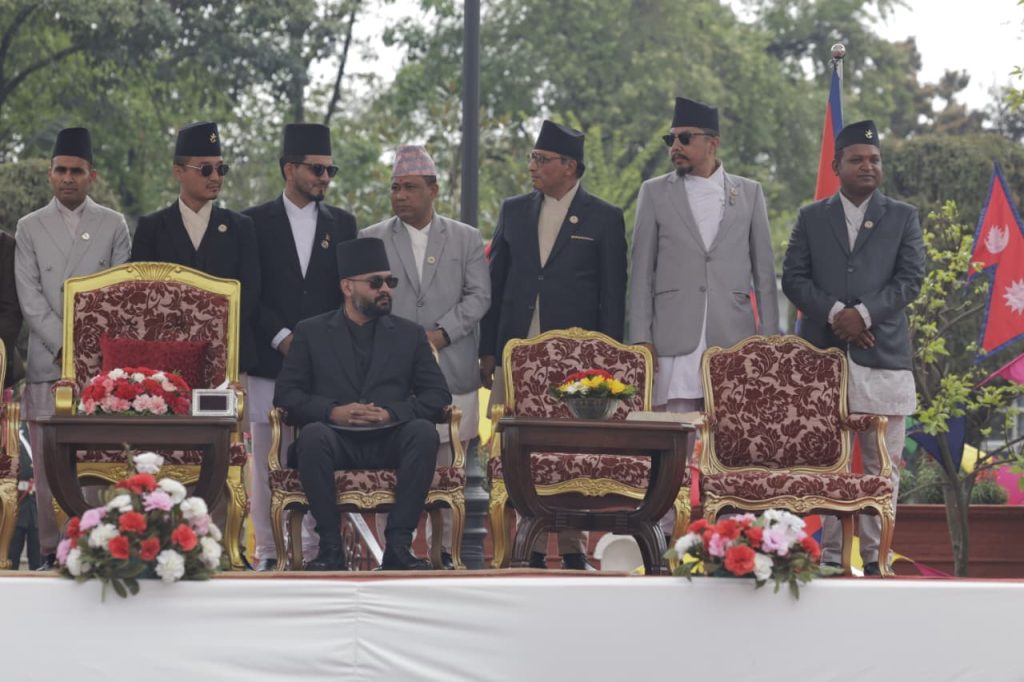
The emergence of the RSP has not eliminated the political class; rather, it has initiated its reconfiguration. The new leadership is composed largely of individuals who derive legitimacy from education, professional experience, and global exposure rather than from historical political struggles or long-standing party affiliation. Senior figures in the government were economically secure, even affluent, prior to entering politics. This marks a significant departure from earlier patterns in which political office was often a primary means of wealth accumulation.
This shift has important implications. The relative economic security of the new elite may reduce incentives for direct corruption and enable a greater focus on policy and governance. On the other hand, it introduces a new form of social distance between political leaders and the broader population. The lived experiences of rural communities, informal workers, and economically marginalised groups may not be fully represented within a leadership class that is disproportionately urban and professional. This was particularly evident during the dismantling of the squatter settlements, when displaced residents reported having no political force or institutional channel through which they could voice their concerns or grievances or seek support. As a result, many complied with the orders in silence.
Moreover, the emergence of a new elite does not resolve the structural dynamics that produce political competition and instability. Rather, it risks creating a new layer within the political class, one that coexists with, and may eventually converge with, older elites. The presence of a few leaders from less privileged backgrounds—often highlighted symbolically—does little to alter this broader pattern.
At the core of Nepal’s recurring political instability lies a structural imbalance between elite ambition and institutional capacity. Estimates suggest that Nepal has tens of thousands of political positions and millions of active or aspiring political cadres, yet a relatively small number of formal businesses and limited avenues for economic advancement outside politics. There are approximately 10,000 registered industries in Nepal, but more than 30,000 political seats across all three levels of government and roughly 5 million political cadres. In comparison, Vietnam saw 65,000 firms enter the market in the first five months of 2024 alone.
This imbalance, as seen in Nepal, creates intense competition for political roles, turning politics into a central arena for negotiating status and opportunity—a phenomenon called elite overproduction. Education, migration, and exposure to global norms have significantly raised expectations, particularly among young people. However, the domestic economy has not expanded sufficiently to meet these aspirations. As a result, individuals unable to achieve their desired status through economic means often turn to politics as an alternative pathway. Historically, this dynamic has produced cycles of instability. Political unrest is thus not only a response to governance failures but also a manifestation of unfulfilled elite ambition.
The rise of the RSP must also be understood within this structural context. While it emerged as a critique of the existing political class, it is simultaneously becoming a new focal point for political ambition. As it consolidates power, it is likely to attract a growing number of aspirants seeking entry, recognition, and advancement. This creates internal pressures that may lead to factionalism and competition. If the party is unable to manage these dynamics through transparent and merit-based systems, it risks reproducing the very patterns it sought to disrupt.
Avoiding the South Asian trap
A recurring pattern across South Asia is that leaders who enter politics with reformist and anti-corruption credentials often undergo a process of transformation once in power. The new government in Nepal faces this same risk. Its leaders, many of whom entered politics with reputations for integrity and professionalism, must now operate within a system shaped by entrenched practices and expectations. Without strong institutional safeguards—such as transparent political financing, independent oversight bodies, and reduced discretionary authority—the likelihood of gradual convergence with existing patterns remains high.
Public perception is critical in this context. The current government benefits from a reservoir of trust and expectation, but this is inherently fragile. If tangible improvements are not visible within a reasonable timeframe, or if signs of patronage and favouritism begin to emerge, public sentiment may shift rapidly. The narrative that this government is ‘no different from the old ones’ can gain traction quickly, particularly in a society where repeated cycles of hope and disappointment have produced deep scepticism.
Feasibility, expectations, and the narrow path forward
The ambitions outlined in the government’s agenda are significant, but their realisation depends on overcoming deep structural constraints. Employment generation on the scale promised will require sustained private sector growth, industrial expansion, and regulatory reform. Hydropower development, while more feasible given Nepal’s natural endowments, still faces challenges related to infrastructure, governance, regional cooperation and climate change. Administrative reform, perhaps the most critical component, will require confronting entrenched interests within the state apparatus.
Ultimately, the success of this political transition depends on the government’s ability to reshape the relationship between politics, economy, and society. As long as politics remains the primary pathway to status and upward mobility, the pressures that have historically destabilised Nepal’s political system will persist. Reducing this dependence requires expanding economic opportunities, strengthening institutions, and creating alternative avenues for social mobility.
The new generation in power thus faces a profound and demanding test. It must demonstrate that political change can lead to structural transformation. This requires not only effective governance but also a reconfiguration of the political class itself. If it succeeds, it may mark a genuine turning point in Nepal’s history. If it fails, it risks becoming another episode in a long cycle where new leaders emerge with promise, only to be reshaped by the very system they sought to change.
