
In the 1990s, when I first learnt of the free kamaiya movement—the grassroots movement to help the roughly 18,000 Tharu families in west Nepal trapped in bonded labour, with debt sometimes moving from parents to children—I assumed that the system originated deep in Nepal’s dark past. Kamaiya bonded labourers were Tharu farm labourers who had accumulated debts to their landlords for weddings and health crises, but also from exploitation and deception. But upon closer study, it became clear that western Nepal’s kamaiya system, although with roots in the 19th century, grew from much more modern soil—the development programmes of the 1960s.
In the 1960s, two programmes pushed by King Mahendra and the US government—malaria eradication and land reform—reshaped the physical and economic landscape of the Tarai, including the Dang valley, a Tharu population centre, dramatically undercutting conditions for ordinary farmers. One result: thousands of Tharu families left the valley at the decade’s end. Another result: many Tharu families fell into the ‘new’ more exploitative kamaiya system.
Dang’s story of ‘backwards’ development shows how interventions in one aspect of life, especially environmental changes, often carry unforeseen consequences in other areas. Understanding Dang’s story of development-gone-wrong helps shed light on the tense politics that has characterised the entire Western Tarai for years.
Dang’s unusual history meets Cold War Nepal
The Dang valley closely resembles Nepal’s Inner Tarai valleys such as Chitwan and Sindhuli. Tigers used to roam the area’s jungle mix of forests, grasslands, and wetlands. So too did the Tarai’s most deadly denizen: the malaria plasmodia. But Nepal’s 19th-century leaders managed Dang differently than Chitwan and Sindhuli, two low valleys near Kathmandu they intentionally depopulated to create a defensive jungle buffer to block potential attacks from the plains. In Dang, on the other hand, Nepal’s rulers encouraged settlement, even recruiting people to settle there, mostly a mix of ‘pahadi’ hill people, both ‘high’ and ‘low’ caste, and, in greater numbers, lowland Dangaura Tharu. For generations, deadly malaria scared away most pahadi, who generally visited Dang only in the winter. The Tharu, though, possessed genetic and acquired immunities and lived in the valley year-round. Although some younger Tharu political activists sometimes forget this fact, the immunities were not complete: they lowered general mortality rates compared to the pahadi but did not prevent a high infant mortality rate. Tharu babies often died from malaria.
In 1843, British visitors to Dang valley counted 15 villages. Tharu and pahadi landlords with quasi-official tax-raising status oversaw entire villages and even clusters of villages. By the 1880s, Dang had many fields, pastures, and irrigation canals. But some corners remained wild. An 1881 Rana document mentions unirrigated land ‘lying waste’ because of the ‘depredations of tigers, bears and wild boars’.
Since malaria and difficult conditions kept people away, nothing defined Dang so much as an acute shortage of workers. Because of this, Tharu tenant farmers often could push their landlords for more favourable terms. In 1879, for instance, Dang authorities warned the Salyan king that ‘the territories comprising the Rajya of Salyan will not become populous, if some tax concessions are not granted there. The ryots [peasant cultivators] demand that they should be given the facilities that have been sanctioned in the adjoining areas’. Landlords worried that, if not treated well, Tharu peasants would skip town, as they often did in Nepal’s Tarai districts. The Tharu, as French anthropologist Gisele Krauskopff notes, often ‘voted with their feet’. In 1879, faced with a worker shortage and fields to work, the Salyan king had little choice but yield to the Dangaura Tharus’ deft demands for better work terms.
Near the end of the century, pahadi landlords began to elbow out the Tharu ones. In 1898, in what sociologist Chaitanya Mishra has described as a ‘systematic and large-scale purge’, Kathmandu authorised pahadi elites to seize the land of Dangaura landlords who owed them money. By 1912, only a handful of Dangaura landlords remained.
But as long as malaria persisted, Tharu tenant farmers maintained some leverage. ‘Ample land was available,’ American anthropologist Charles McDougal wrote of Dang in the early 20th century, ‘but there was a scarcity of labour.’ This all changed in the 1960s when Cold War geopolitics, national panchayat politics, and powerful local elites transformed Dang’s physical and social landscapes.
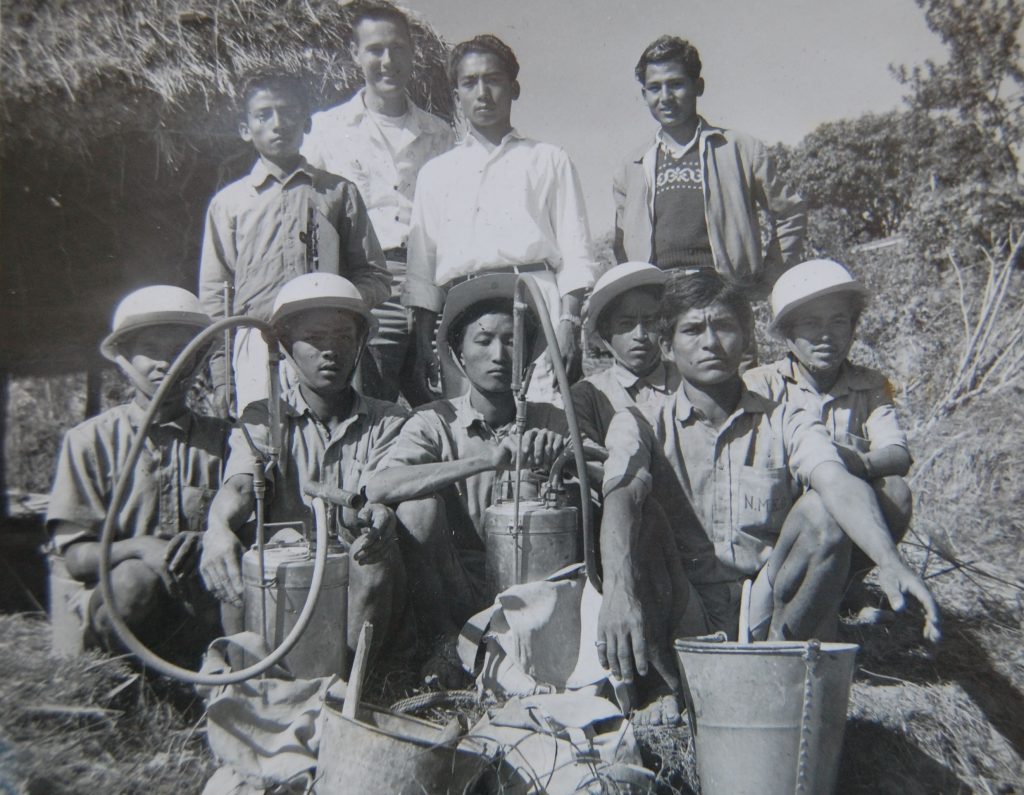
In the late 1950s, the US moved to counter expanded aid to Nepal from the Soviet Union and China, hoping to stabilise Nepal and win friends in the region. To do so, it turned to landscape management using ‘miracle chemicals’: it joined forces with the Nepali government and the WHO to run a nationwide malaria program using DDT. The idea was to open new resources in the Tarai. At the same time, the US also pushed land reform in Nepal (and indeed across Asia), as a way to head off communist appeal at the grassroots.
During these years, especially after his 1960 coup, King Mahendra faced a problem: How, as a monarch in a modernising world, could he maintain international legitimacy? The solution: bring remote Nepal modern ‘bikas’ through malaria eradication, land reform, and other development programmes. ‘The king,’ American political scientist John Scholz has written, ‘was the single most important supporter of the land reform program.’ Mahendra also had domestic reasons for land reform: a desire to control landed elites. Land reform was passed in 1964.
By this time, though, the situation looked a little different. Having solidified his domestic political base and gained newfound support from India and the US, Mahendra’s interest in far-reaching land reform evaporated. By 1965—the year land reform started in Dang—he had moved away from deep reforms.
Because of this, in places like Dang, Nepali officials implemented the 1964 legislation only sporadically and half-heartedly. Without a strong push from the king, Scholz notes, ‘rural resistance’ from landlords and other elites killed real land reform. Another American political scientist, Leo Rose, thought that the Nepal land programme ended up a ‘grotesque caricature’ of its original intent.
DDT and land reform changed Dang forever
DDT spraying started in Dang in spring 1965. Upper-level programme staff came from Nepal’s small upper-caste educated elite, and some came from landlord families in other parts of Nepal. One who grew up in the eastern hills just above the Tarai explained to me his community’s relationship with the area’s Tharu tenants: ‘The Tharu plough the ground, and we plough the Tharu.’
Just a few days of work, the spraying set off a series of cascading ecological, social, and economic effects lasting decades—and is still playing out. Most immediately, as DDT flowed through the food chain, cockroaches, and insects, and even larger animals died. ‘After DDT spraying,’ one elderly Dangaura man told me, ‘not a single cat survived in the valley.’
But a larger impact came from eliminating the Anopheles minimus, the falciparum malaria it carried, and—crucially—the fear that surrounded it. For generations, the dreaded disease had killed babies, weakened survivors, terrified outsiders, and blocked in-migration. But now it was gone. In truth, malaria had been declining for decades, as cultivation disrupted the watery habitat mosquitoes needed for reproduction. But armies of government workers spraying miraculous foreign chemicals sealed the deal—psychologically—for fearful hill-folk. Dang Valley would never be the same again.
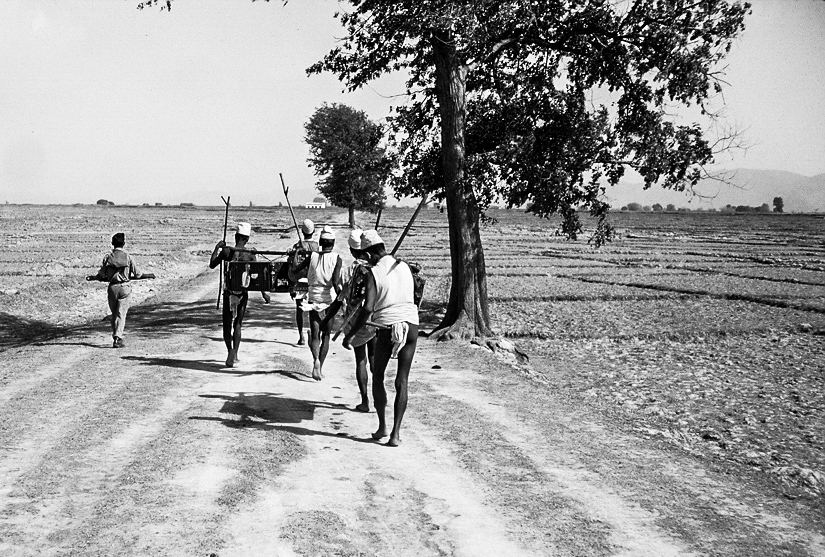
Beginning in 1965/1966, some hill landlords ended their seasonal ridgetop-to-valley-floor migration, moving to Dang year-round. This at first brought Tharu tenants some relief. No longer would they have to lug landlords and heavy loads on palanquins up into the hills. But in other ways, things deteriorated: year-round landlord presence undercut Tharu autonomy. For nine months of the year, Tharu had been ‘free’, Dangaura cultural expert Ashok Tharu told me. ‘Now they faced 12 months of supervised work.’
Year-round bosses also meant more work of all types, especially domestic: more meals to prepare, dishes to wash, clothes to clean, firewood to collect, fences to build and mend, vegetable gardens to weed, walls to plaster, animals to feed, and children to look after. As a result, the need for female domestic workers increased.
That was not all. No longer afraid, hill-folk poured into the valley like a monsoon flood. According to one elderly Tharu man, the hill folk ‘whattai aayo’—they arrived ‘in one fell swoop’.By 1980, only 15 years after the first DDT spraying, the Dangaura Tharu numbered only 40 per cent of the entire Dang/Deukhuri district, and less in the Dang valley itself, compared to almost 100 per cent before DDT.
Dang became a ‘settler society’, not unlike parts of North and South America, Australia, and New Zealand. In-migrants soon outnumbered and dominated the locals. Many newcomers and Tharus got along well, of course, but tensions often flared, particularly regarding crop-eating animals and irrigation canal maintenance.
Most importantly, the many newcomers upended the valley’s economic landscape. With thousands of new settlers, the central dynamic that had shaped the valley for generations shifted: the valley went from land abundant and labour scarce to land scarce and labour abundant. Tharu tenant farmworkers found themselves easily replaceable. A new Dang was born.
Implemented by the valley’s tightening hierarchy in November 1965, a half year after the DDT spraying, the land reform programme’s four components—land ceilings, tenancy rights, fixed 50/50 rents, and a savings programme—moved things in Dang from bad to worse for Dangaura tenants.
To avoid the land ceilings, landlords got creative, registering their property in their children’s names, giving it to hill relatives, or selling it. The result: parcels of land grew smaller, while the number of landowners increased. A new group of smaller pahadi landowners emerged, often harsher than the old-timers.
Under the land reform programme’s tenancy rights (mohiyani hak) provisions, long-term tenants could acquire special rights to the land, even ownership options. But courageous tenants who spoke up for their legal rights often encountered threats and intimidation, collusion of landlords and state officials (also pahadi upper caste), and even violence. To avoid giving tenancy rights, some landlords even booted Dangaura tenants off the land, thus creating the opposite effect to the provision’s goal.
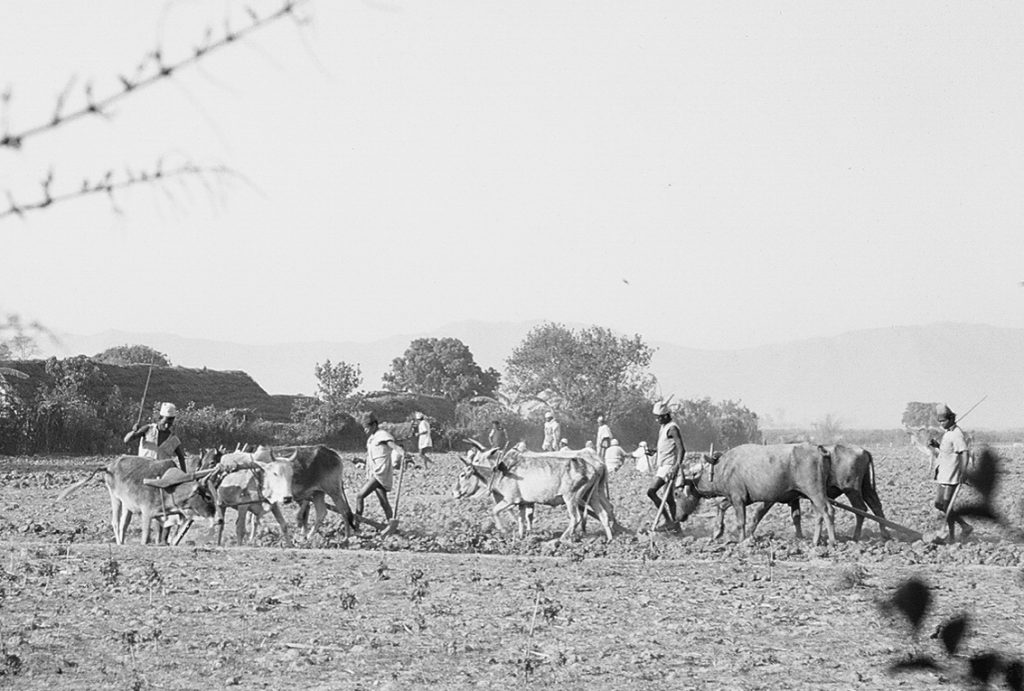
The new 50/50 national standard for splitting the crop also undermined Tharus. In some parts of Nepal, 50/50 may have upped the split for tenants, but not in Dang. Before the 1960s, when labour was scarce, tenants had taken home 60 per cent of the crop and often more. For years, they had resisted a 50/50 split. After land reform, as McDougal noted, ‘The actual tiller received less income from the land than before.’ One Dangaura man explained why Tharu tenants accepted the new terms: ‘The Brahmin landlord said so…We couldn’t do much, it was their land.’
Compulsory savings also backfired. The Dangaura tenants, generally illiterate and unfamiliar with banking and commercial economies, often found themselves easy prey to the pahadi elites. ‘The compulsory savings programme had a good mission,’ Ashok Chaudhary, a former political leader (not to be confused with Ashok Tharu), said, ‘but it didn’t work. Big people took advantage. Lots of debt started then.’
In 1972, in the first issue of a Dangaura newsletter called Gochali, a young Sagun Laal Chaudhary poignantly described how malaria eradication and land reform had recently devastated Dang’s families. Chaudhary did not attack the malaria programme itself but did decry that many new arrivals from the hills—‘the rich class’—acquired farms. Landlords multiplied, he wrote: ‘Now one [Tharu] farmer has to support 10 landlords with his own labour whereas before he had to support only one.’ Tenancy terms worsened, he noted.
‘The 50/50 terms,’ Chaudhary wrote, ‘are being pushed on farmers by force.’ Previously, farmers had leverage. The tenancy rights programme ‘brought no help’. And the compulsory savings programmes only added salt in Tharu wounds: Dangaura farmers, Chaudhary wrote, ‘didn’t have grains at home and yet had to give to the savings programme’. Ordinary farmers faced hungry children at home—and dangerous landlords in the fields: ‘We have hundreds of examples of villages where farmers have met only violence.’ Not long afterwards, the government banned Gochali, confiscating all copies.
Land reform in Dang, Mishra noted in 1984, ‘dealt a severe blow to the Tharus’.
Perhaps a Dangaura elder put it best to me: ‘Ulto kaam bhayo.’ Land reform, he said, had accomplished ‘backwards work’.
Debt bondage and departure
As labour competition spiked in the late 1960s, Dangaura negotiating power fell off a cliff. At the same time, the number and nature of Dang’s landlords changed. ‘After land reform—that’s when it got bad,’ one Dangaura who fell into kamaiya status in those years told me.
Another noted, ‘The kamaiya system got worse.And debt piled up.’
Ashok Tharu agreed: ‘Tharu debt surged in the 1960s.’
A ‘new kamaiya system’ emerged, political leader Dilli Chaudhary told me.
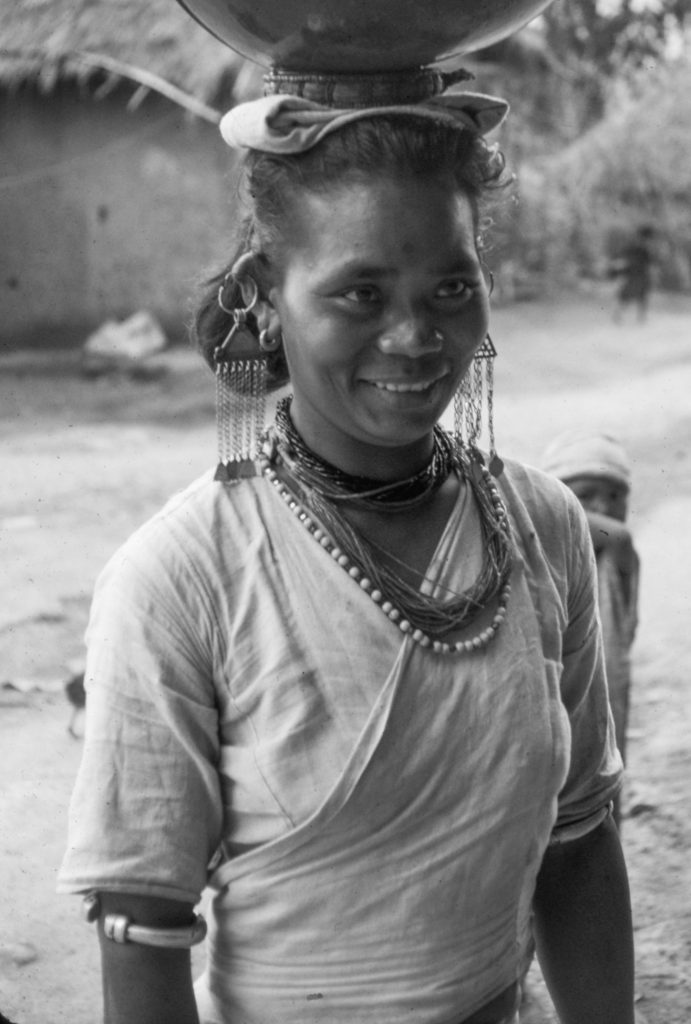
Kamaiya and kamlari (girl servants) often faced a bleak existence. ‘We were like buffalo,’ explained one elderly Dangaura man. Some kamlari endured sexual harassment and even rape. Interviewees spoke of the ‘bhagwanle dieko baccha’—children ‘given by the gods’.
In the half-decade after 1965, many Dangaura families pulled up stake and left. It was push–pull. Dang’s harsh new economic landscape pushed the Dangaura away, while the lure of available land and forest in Bardiya and Kailali—although often illusory—pulled.
In astonishing numbers, Dangaura families abandoned old homes and farms. In many villages, 50 to 75 per cent departed; in a few, everybody left. ‘Whole villages moved,’ explains Krauskopff.
The Dangaura families left on foot. They sometimes left at night to avoid landlords and the police. Some sold belongings, but most carried what they could—clothes, tools, cooking pots. They led buffalo, cows, and sheep. They carefully carried their small clay horse-shaped household gods. Families walked together, in groups of eight to 15, sometimes twice that. Old women walked alongside sons and daughters-in-law with babies and small children. To leave the valley, they climbed a low but daunting range of mountains 1,000 metres high, then crossed lowland jungles full of dangerous animals. All told, the journey took 4–10 days.
Grandmothers and grandfathers faced particular troubles. In leaving Dang, one old gentleman told me, they were saying goodbye to the farms of their own grandmothers and grandfathers—‘leaving birth-place homes they had made themselves, and the fruit gardens they had planted and tended themselves for many years’.
How many left is hard to say. Krauskopff estimates that 30 per cent of the entire Dang Tharu population departed, or roughly 30,000 people. My own research—a village-by-village survey of Dangaura leaders at the time—confirms this number.
Dang’s 1960s history is a story of how development programmes sometimes not just fail but completely backfire, especially for Indigenous people, especially in South Asia. Sadly, in Dang, the 1960s health programmes meant to root out a dreaded disease yielded broad social upheaval for the Tharu. Land reform meant to bring peasants security and prosperity delivered displacement and debt bondage. Dang’s ‘backwards development’ highlights the limits of development projects motivated by far-off political agendas and engineered by ‘experts’ without a solid grasp of the on-the-ground socio-ecological and political landscapes.