
For much of the twentieth century, outside Nepal, Nepali was taught to and learned by a fairly specific cast of learners: colonial officers, missionaries, soldiers, volunteers, development workers, diplomats, and students. Many arrived with specific ‘projects’ in mind. Some came through structures shaped by empire, others through Cold War-era internationalism, and yet others through anthropology, development studies, and Himalayan area studies. Nepali was a language one learnt in order to go there: to preach, serve, research, administer, translate, teach, trek, or intervene.
That older ecology produced some extraordinary scholarship and legendary teachers, but it also produced assumptions: that the learner was usually a foreigner; that the goal was oral competence sufficient for fieldwork, service, or research; that the classroom was preparation for arrival in Nepal; and that spoken language (more than literacy) was a tool of social access. Nepali was not usually framed as diasporic inheritance or heritage, nor as something children of Nepali-speaking families abroad might reclaim. Put another way, outside of Nepal, Nepali generally functioned as a language through which outsiders gained social, institutional, and affective entry into the country. Only more recently has it become a language of reconnection for families carrying Nepal with them as they have migrated and settled.
From institutions to inheritance
This first model is well represented by materials produced for organisations such as the Peace Corps, whose first Nepal group arrived in Kathmandu in 1962. The Basic Course in Spoken Nepali was designed around volunteers’ practical communicative needs, while Peace Corps trainees still receive pre-service training in Nepali language and culture. Similarly, the Brigade of Gurkhas continues to run Nepali culture and language courses for officers, non-Nepali service personnel, and their families.
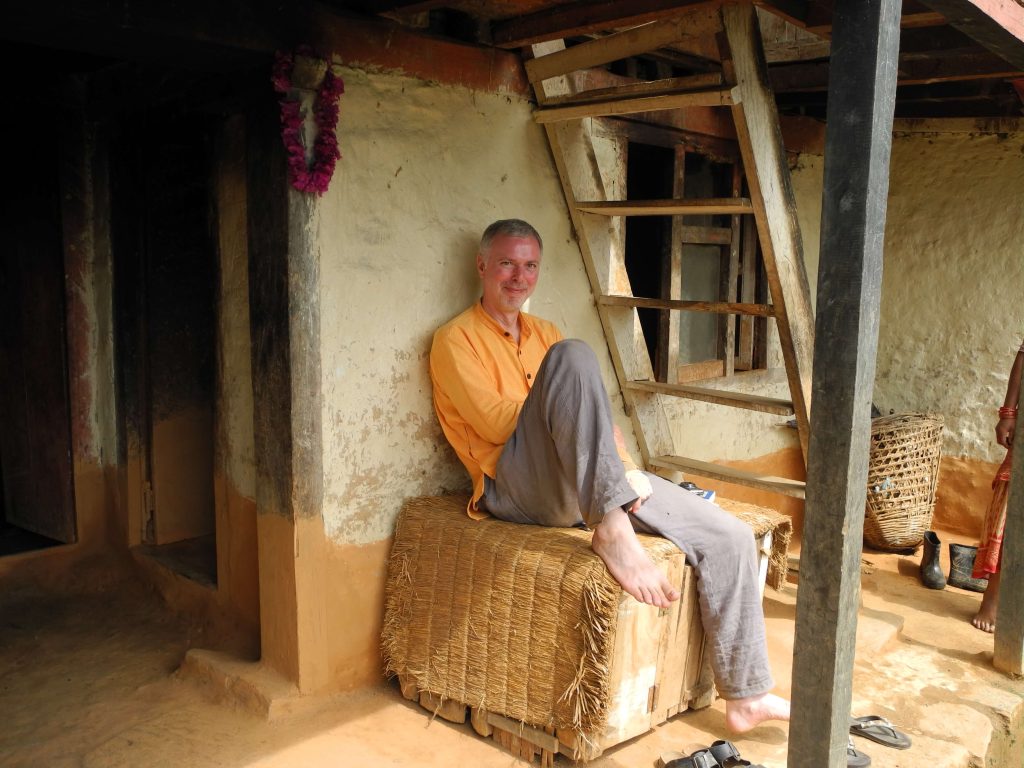
The history of Nepali language teaching in universities is equally instructive. In Britain, SOAS University of London was for many years the great Anglophone home of Nepali language, literature, and Himalayan studies. Its combined honours BA in Nepali joined language, literature, and social science with anthropology, development studies, geography, history, law, politics, linguistics, and religious studies, and included a year abroad at Tribhuvan University’s Bishwa Bhasa Campus in Kathmandu. Michael Hutt and Krishna Pradhan were key figures, and the textbooks Hutt co-authored with Abhi Subedi and Krishna Pradhan became central resources for generations of students. The end of regular Nepali teaching at SOAS came into sharp focus in 2020, when Hutt took early retirement after more than three decades there.
In North America, Cornell University has been perhaps the most important centre for Nepali language teaching. Cornell’s current catalogue lists elementary, intermediate, and advanced Nepali, and the university has long been associated with Nepal scholarship. After the retirement of Banu and Shambhu Oja, Hom Acharya has continued to teach at Cornell. Cornell’s reach now extends beyond Ithaca through the Shared Course Initiative, through which Nepali can be offered to students at Columbia and Yale. Shared teaching can sustain less commonly taught languages, but it also requires synchronising calendars, credit systems, technologies, enrolments, and expectations across several universities. The premise is simple: a language with small enrolments at any one university may survive by being shared across several, but still that survival remains delicate.
In continental Europe, Heidelberg University’s South Asia Institute offers another model, teaching Nepali within South Asian Studies alongside Bengali, Hindi, Sanskrit, Tamil, Urdu, Classical Tibetan, and other languages. Nepali here is part of a larger South Asian and Himalayan intellectual and linguistic ecology. In France, INALCO (National Institute for Oriental Languages and Civilisations) offers perhaps the most embedded European degree pathway in Nepali, situating the language within literature and civilisation training and aiming for advanced oral and written competence.
These institutions remain important to Nepal and Himalayan studies outside Nepal, but they belong to a university ecosystem under financial pressure and shaped by neoliberal frameworks of recognition and value. Specialist programmes in under-resourced languages are expensive, vulnerable to low enrolments, and often dependent on individual teachers. We feel this tension at my own institution, the University of British Columbia (UBC). UBC has supported an open-access Nepali textbook through an OER Affordability Grant Program, even as longer-term in-person provision remains vulnerable. OERs (open educational resources) are not free because labour is free; they are free to users because someone has paid for the labour and infrastructure that make them possible.
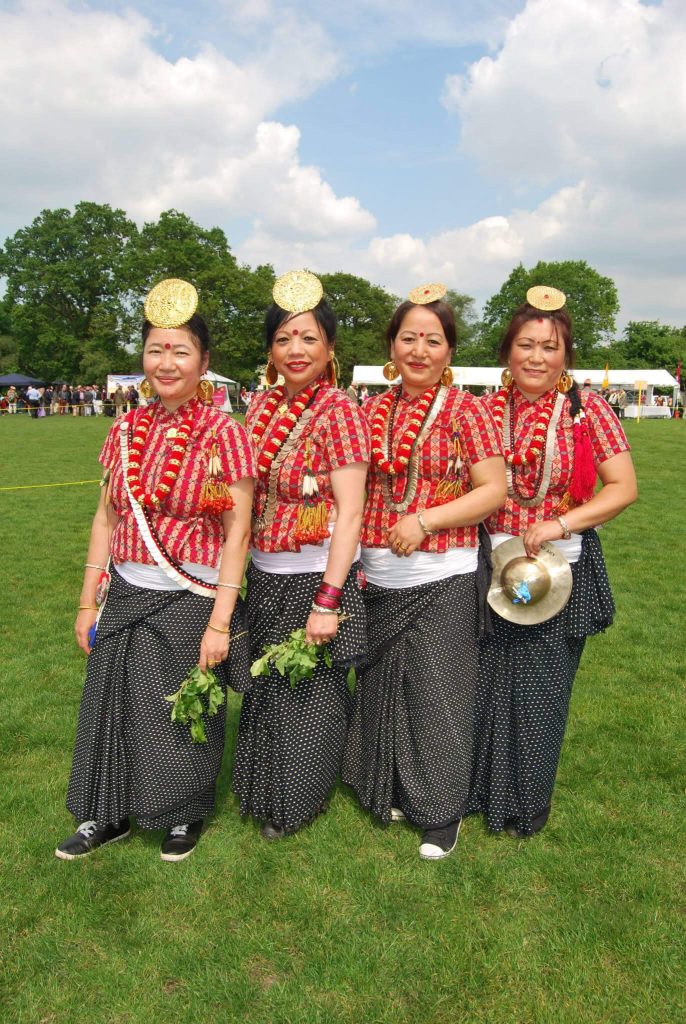
At the same time, the global Nepali-speaking world has changed. Nepalis now live, study, work, and raise families across the Gulf, Malaysia, South Korea, Japan, Europe, North America, and Australia. Their children often grow up with complex linguistic repertoires. Some understand Nepali but do not speak it confidently. Others speak it but cannot read Devanāgarī. Some associate Nepali with grandparents, festivals, food, reprimands, songs, jokes, or WhatsApp calls. Others have ambivalent relationships with the language, shaped by caste, ethnicity, class, region, schooling, migration, and English. Still others speak ancestral mother tongues—Nepal Bhasa, Sherpa, or Tharu—alongside English and a dominant local language, bypassing Nepali altogether. For most diasporic learners, Nepali is not a ‘foreign’ language but one of heritage, ancestry, and belonging.
The purpose of the Nepali classroom is shifting, as are its imagined students, because Nepali speakers themselves are dispersed. The learner is no longer only a graduate student preparing for fieldwork or a volunteer preparing for service. The learner may be a Nepali Canadian texting a grandparent in Patan; a second-generation Nepali American who speaks English at school and Nepali at home but cannot read; a Bhutanese Nepali speaker negotiating displacement; a partner in an intercultural family; or a heritage student seeking formal recognition for informal knowledge. In Britain, this is visible in places such as Aldershot and Farnborough, where Gurkha settlement after 2009 has made Nepali part of the everyday linguistic landscape.
Beyond the classroom
In this fast-changing context, the traditional classroom is no longer the only site of instruction. Summer intensives still matter, although they too are vulnerable to funding regimes. The South Asia Summer Language Institute at the University of Wisconsin–Madison has long offered proficiency-driven courses in South Asian languages, including Nepali, in an eight-week format equivalent to a year of study. The University of Washington has offered a short intensive Nepali course, although its South Asia Center notes that the synchronous Nepali programme will not run in summer 2026 because of the loss of federal grant funding. The weakening of Title VI international education funding in the United States is a reminder that the fortunes of less commonly taught languages remain tied to geopolitical priorities. At UBC, the Himalaya Program has offered intensive Nepali in community-engaged formats for a decade, drawing on Binod Shrestha’s applied language work in Nepal and North America.
Important changes are also occurring beyond the in-person university classroom as online, asynchronous, and digitally mediated learning becomes central to teaching and learning. This is not an either/or proposition. University classrooms, summer intensives, community schools, family learning, self-study, and open digital resources serve different learners and objectives. The question is therefore not simply which universities teach Nepali, but also what resources a community programme can use for a weekend Nepali language class in Aldershot, Queens, Tokyo, or Sydney.
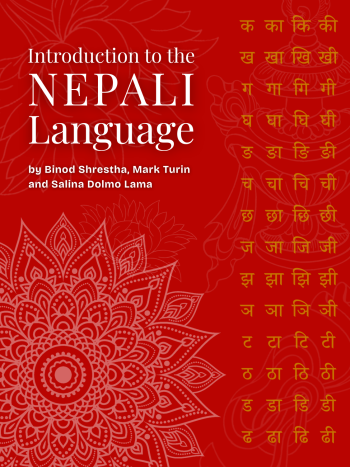
This is the context in which we (Binod Shrestha, Salina Dolmo Lama and I) developed Introduction to the Nepali Language, a free OER. The resource is not a replacement for a teacher. No textbook is. Rather, it recognises the changing context of Nepali learning, in which university students, community learners, heritage speakers, independent learners, instructors, and organisations all need something structured, accessible and adaptable. As an OER, it can be revised, expanded and corrected as learners and teachers tell us what works.
The book itself is organised into 17 chapters, beginning with Devanāgarī script and pronunciation. The opening chapter introduces vowel signs, consonants, syllable construction, conjuncts, nasalisation, numerals, and writing conventions. Later chapters develop speaking, listening, reading and writing through vocabulary, grammar explanations, guided exercises, audio-supported learning, interactive activities, and cultural insights. It is intended for university instructors, community organisations, and independent learners, while remaining flexible enough to be adapted to different teaching contexts.
This shift from printed textbooks to open digital resources changes teaching and publishing. The traditional model assumed a controlled setting: class, instructor, cohort, syllabus, and foreign destination. OERs assume asynchronous and global circulation. They also acknowledge imperfection and revision, which can unsettle academics trained to release work only when finished. But language learning is never complete. It is recursive, social and situated. A living resource better reflects that process than a finished textbook.
One language among many
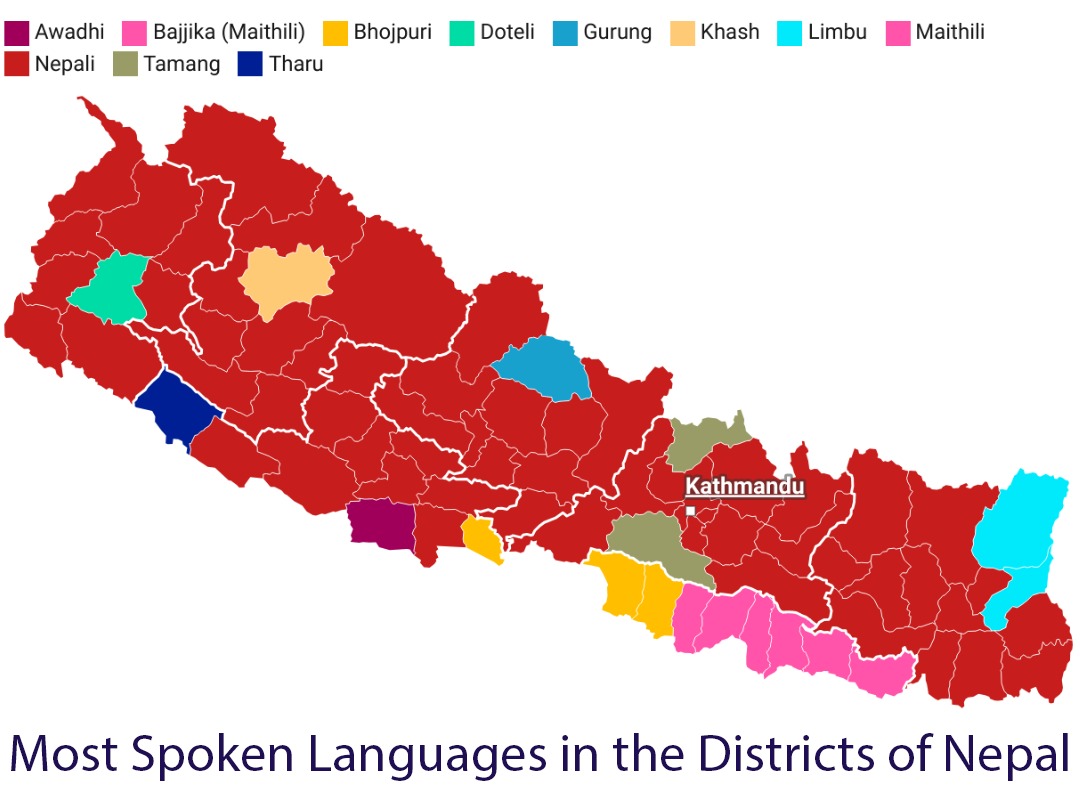
Another dimension needs to be addressed. Nepali is both a national language of Nepal and a language with fraught histories of expansion. It has functioned as a lingua franca, literary language, administrative language, and language of aspiration within and beyond Nepal. It has also been implicated in the marginalisation of Nepal’s many other languages and, at times, served as a language of exclusion and oppression. Teaching Nepali outside Nepal means situating it within a constitutionally recognised multilingual country and an increasingly plurilingual diaspora. Learners need to understand that Nepal is not linguistically singular, and that it exists alongside Maithili, Bhojpuri, Tharu, Tamang, Nepal Bhasa, Limbu, Gurung, Magar, and more than a hundred other languages.
A language textbook cannot resolve these histories, nor should it pretend to. But it can help make them visible. Teaching Nepali means talking about it as one language within a multilingual Nepal and a multilingual diaspora, not as the singular voice of a homogeneous nation. It also means acknowledging different learner positions: first-language speakers seeking literacy, heritage learners seeking reconnection, researchers seeking competence, and speakers of other Nepali languages negotiating the state language.
The teaching of Nepali outside Nepal is at a turning point. Some institutional homes have weakened or disappeared. Others, such as Cornell, Heidelberg, and INALCO, remain vital but face persistent challenges. New forms of instruction—shared courses, summer intensives, community-engaged learning and open digital resources—are emerging. In India, Nepali is taught as an Indian literary and constitutional language at institutions such as Sikkim University rather than as a foreign language. In China, universities follow a strategic-language model, with Nepali taught at Beijing Foreign Studies University and the Communication University of China in connection with diplomacy, economic interests and regional geopolitics.
Teaching for a global diaspora
What ties these approaches together is a changing understanding of Nepali’s place in the world. Nepali is no longer taught abroad only because outsiders wish to visit or work in Nepal. It is taught because Nepalis have left Nepal; because families stretch across continents; because scholarship is multilingual; because diplomacy and development activities continue, albeit through different agencies and nations than those involved after Nepal’s opening in the 1950s; because the appetite for Nepali literature is now global; and because language, once loosened from its umbilical connection to a particular homeland, must be cultivated in new ways.
Nepali has become more globally present just as many formal university programmes have become more precarious. The future of Nepali language teaching abroad will probably not be secured by low-enrolment, in-person university courses, though those foundational histories deserve remembering and celebrating. Nor will it be secured by technology alone. Rather, it will depend on recognising that Nepali has always travelled: with soldiers, poets, traders, teachers, labour migrants, refugees, students, lovers, and families. The earliest major movements of Nepali beyond Nepal were regional, especially into Darjeeling, Sikkim, Uttarakhand, Assam and southern Bhutan, where migration, labour recruitment, and settlement from the nineteenth century onward helped establish Nepali-speaking communities. Now the Nepali diaspora is global. Our approach to Nepali language teaching must travel with an imagination equal to that of Nepali speakers and learners around the world.
